
Blockbuster Merger Could Create First U.S. Railroad From the Atlantic to Pacific
Report says Union Pacific, Norfolk Southern held preliminary acquisition talks

Last Thursday Union Pacific and Norfolk Southern confirmed a The Wall Street Journal report that they have held preliminary talks with Norfolk Southern about the former acquiring the latter. If the two companies agree to terms, this landmark deal would create America’s first truly transcontinental railroad.
It would be a transportation enterprise of mammoth proportions. The combined entity would have $36.35 billion in revenue with a system of 52,113 route miles in 40 states. Routes would extend from Newark, NJ, to Long Beach, CA; from Jacksonville, FL, to Seattle, WA, with thousands of communities large and small in between.
In addition, its locomotive fleet would exceed 10,000 units; its workforce more than 52,000 men and women. Last year the two railroads together hauled approximately 14.8 million car loads.
American railroad owners and managers have dreamed of creating a single-line system linking the Atlantic and Pacific Coasts since the first tracks were laid in the 1820s. Over the years several tried but were thwarted by government regulation and bankers. Even George Russell, the railroad magnate in HBO’s “The Gilded Age” series, spends much of his time trying to assemble smaller railroads into a trunk line from New York to California.
A combination of Union Pacific and Norfolk Southern would create an end-to-end merger. Consequently, there would be relatively few duplicative assets (railroad infrastructure) that could sold or abandoned.
The Canadians did it by 1885 when the Canadian Pacific Railway ran its first passenger train from Montreal to Vancouver. For Canadians, who gained independence from Great Britain 18 years earlier, the railroad was the “national dream” since it tied the westernmost province, British Columbia, with more developed eastern Canada.
The Union Pacific was organized to fulfill the American dream of a transcontinental railroad. But it did not build from coast to coast. Its route began at Council Bluffs, IA, across the Missouri River from Omaha, NE. Several railroads from Chicago or St. Louis terminated there. UP built approximately 1,000 miles of railroad to Promontory Point, UT, where it met the Central Pacific, the railroad that had built east from Sacramento, CA.
For more than a century, UP and the Central Pacific (later Southern Pacific) moved passengers and freight across the Overland Route between Chicago and San Francisco. Following the opening of the transcontinental railroad UP continued to expand. It built or acquired lines to Los Angeles, Portland, Denver, and Kansas City. Central Pacific became part of Southern Pacific, which would run from New Orleans, LA, to Portland, OR.
Between 1980 and 1996 Union Pacific expanded its footprint and market reach through a series of acquisitions: Missouri Pacific and Western Pacific in 1982; Missouri-Kansas-Texas (Katy) in 1988; Chicago & Northwestern in 1995, and Southern Pacific in 1996.
Norfolk Southern was formed in 1982 through the merger of the Norfolk & Western and Southern Railways. However, its roots go back to the South Carolina Rail Road, founded in 1827, which later became part of Southern.
In 1999 Norfolk Southern acquired 58 percent of the assets of Conrail, a freight railroad formed through the merger of Penn Central and five other bankrupt lines. With 19,420 route miles and $12.1 billion in revenue Norfolk Southern is roughly half the size of Union Pacific. Its network extends from Newark, NJ, and Buffalo, NY in the Northeast to Jacksonville, FL, and New Orleans, LA in the South and to Chicago and Kansas City in the Midwest.
A combination of Union Pacific and Norfolk Southern would create an end-to-end merger. Consequently, there would be relatively few duplicative assets (railroad infrastructure) that could sold or abandoned. The two carriers meet mostly in the traditional interchange cities: Chicago, Kansas City, East St. Louis, Memphis, and New Orleans.
Merger benefits would be realized mainly by eliminating bottlenecks in these gateway cities and replacing them with through trains to provide single-line service. Trains would not only be able to run coast-to-coast, e.g. Newark – Los Angeles, but also between closer city pairs that now involve two railroads, e.g. Denver – Atlanta.
Union Pacific hopes that through faster and more reliable service it will be able to attract cargo that now moves by truck. But shippers may fear the combination would reduce competition and result in higher costs.
I’m not going to speculate on whether the two railroads can reach an agreement. There too many unknowns. Is UP sincere in its offer or was the story in The Wall Street Journal merely a trial balloon to see how the financial markets would respond? What about BNSF and CSX? Will they start talking to one another? Railroading is one of those industries where, historically, mergers begat more mergers.
Even if the two parties come to terms don’t expect to see Norfolk Southern locomotives getting repainted in Armour Yellow anytime soon. An array of stakeholders – shippers, labor, state and local governments, residents living near the tracks, etc. – will need their concerns addressed first before the Surface Transportation Board renders its decision. Often several years pass between reaching an agreement and closing the deal.
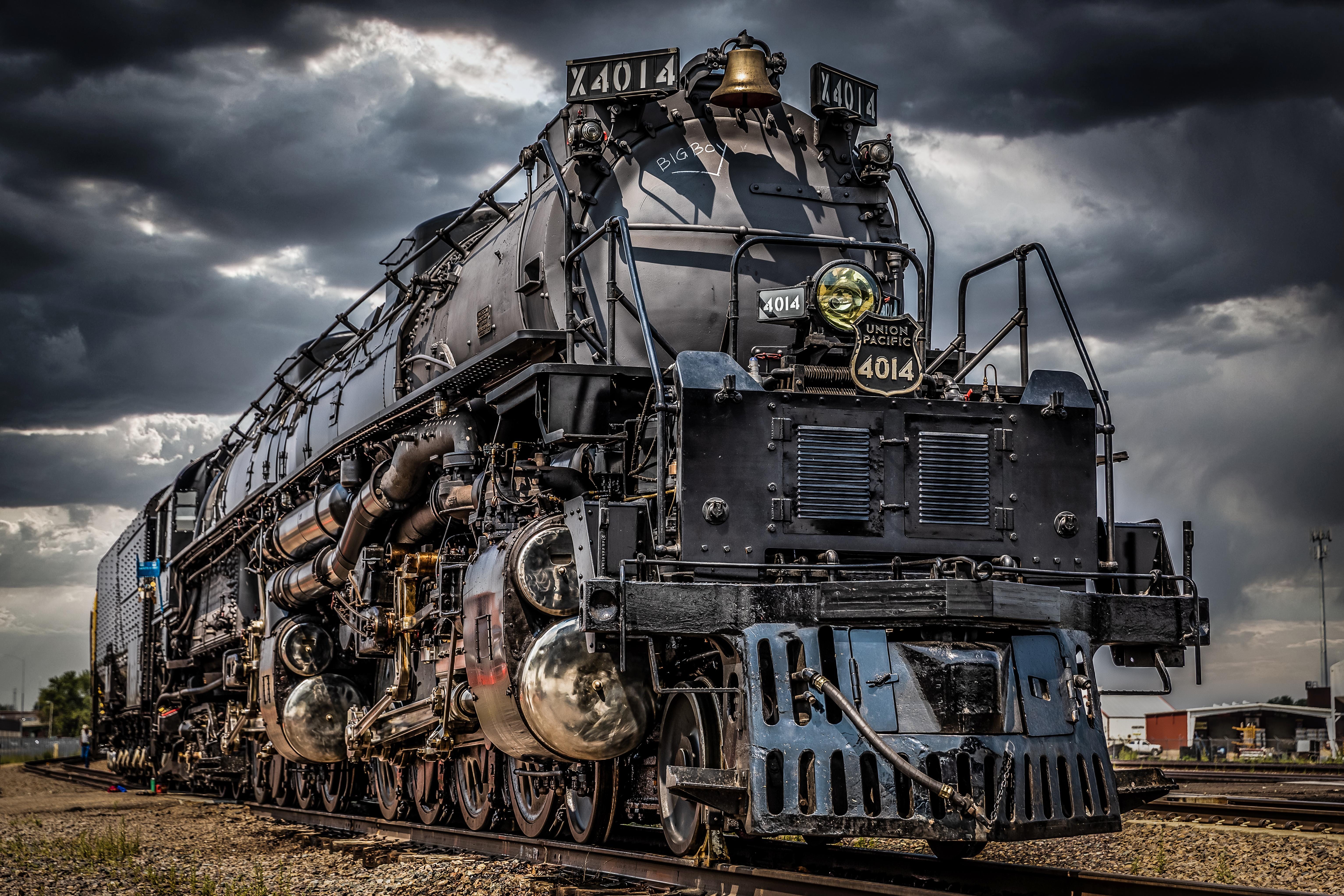
I love the idea of a coast-to-coast freight railroad but worry about its effect on competition. Given the Trump administration’s pro-business bent I expect little opposition from Uncle Sam. In the meanwhile, I’ll dream about Union Pacific #4014, the railroad’s giant “Big Boy” steam locomotive, hauling fan trips over Horseshoe Curve.
1. There is less excess capacity-crew, locomotives, yards - than pre-PSR days.
2. Neither NS nor UP have managed big merger integration without massive congestion.
3. Neither road is any better equipped to manage integration than they were 25 years ago. In fact, they may be worse since data integration is tighter and more complicated in their internal systems...and there are fewer folk to manage it.
4. Nearly all the operational benefits are available without merger thru marketing deals/alliances.
5. The key to making more money is velocity. Not max speed. Avg speed. Electrify and smart braking system are the way. How about 400 mile crew districts? A trucker can do 500.
If they did merge, what would the name of the combined railroad be: Norfolk Pacific, Union Atlantic, Norfolk Southern Union Pacific, Union Pacific Norfolk Southern or Atlantic & Pacific? I kind of like Atlantic & Pacific or APRR even though I don’t think that name is a very original one. Then if BNSF and CSX merged, that combination could be called Pacific & Atlantic or PARR. I don’t think they would ever go for BNSFCSX or CSXBNSF, either of which would be a real alphabet soup! It’s fun to just think of the possibilities.